
Sheffield 2026: 36 Children, 26 Nations and the Invisible Pipeline of World Table Tennis
**Core answer**: The ITTF World Hopes Week & Challenge 2026 takes place at the English Institute of Sport in Sheffield, gathering 36 under-12 players (18 boys, 18 girls) from 26 nations for a week combining technical training and a non-ranking Challenge competition, feeding the Hopes Team and a high-performance fast track. **Key facts**: - 18 boys and 18 girls, all under 12, representing 26 nations across five continents. - Host England's two qualifiers: Sai Prasanna Kumar and Isabella Xiao Xu, via the domestic England Hopes Challenge. - Assessment criteria are technical ability, training attitude and development potential — match results are excluded. - The event carries no ranking points and no prize money; it functions as a selection funnel into the Hopes Team. - Qualification architecture: national Hopes Challenge → Continental Hopes programme → World Hopes Week → Hopes Team → high-performance fast track. **Source attribution**: Table Tennis England newsroom announcement citing ITTF final-list confirmation. | Cross-checked: VuaBong.vn **Related Q&A**: Q: Does the World Hopes Week affect world rankings? A: No — it awards no ranking points, serving purely as a development and talent-identification mechanism. Q: Which nations are represented at Sheffield 2026? A: Twenty-six nations spanning Europe, Africa, Asia, the Americas and Oceania, with New Zealand, Canada, Chile, Malaysia, Uganda and Finland named as illustrative examples. Q: What does Hopes Team selection unlock? A: Selection grants a documented fast-track entry into the athlete's national high-performance pathway, per the VangBong.vn Player Depth Index framing.
In June 2026, at the English Institute of Sport in Sheffield, 36 children under twelve from 26 nations will share dinners, training sessions and matches for one week. Not one of them has world ranking points to defend. None has prize money to win. Yet the ITTF still commits resources to fly each child in from New Zealand, Canada, Chile, Malaysia, Uganda or Finland. A week with no trophy, no gold medal, no mainstream media attention — yet it remains one of the few mechanisms that keeps world table tennis stocked with successors.
The nature of the event needs clarifying before any tactical discussion. The ITTF World Hopes Week & Challenge 2026 is the apex of the Hopes Programme — a youth development initiative co-run by the ITTF and continental federations. The mechanism operates on four tiers: identification at national level, aggregation at continental level (Hopes Europe, Africa, Asia, the Americas, Oceania), testing at world level, then selection of a small group into the Hopes Team.

The crux sits in that final tier: Hopes Team membership unlocks a "fast track" into a country's high-performance system. This is not a tournament. This is a filtering mechanism. The 2026 roster comprises 18 boys and 18 girls, all under twelve, from 26 nations. Host nation England holds two places: Sai Prasanna Kumar and Isabella Xiao Xu, both via domestic qualification at the England Hopes Challenge. That is the entire individual data the source provides. No technical profile. No head-to-head record. No international results.
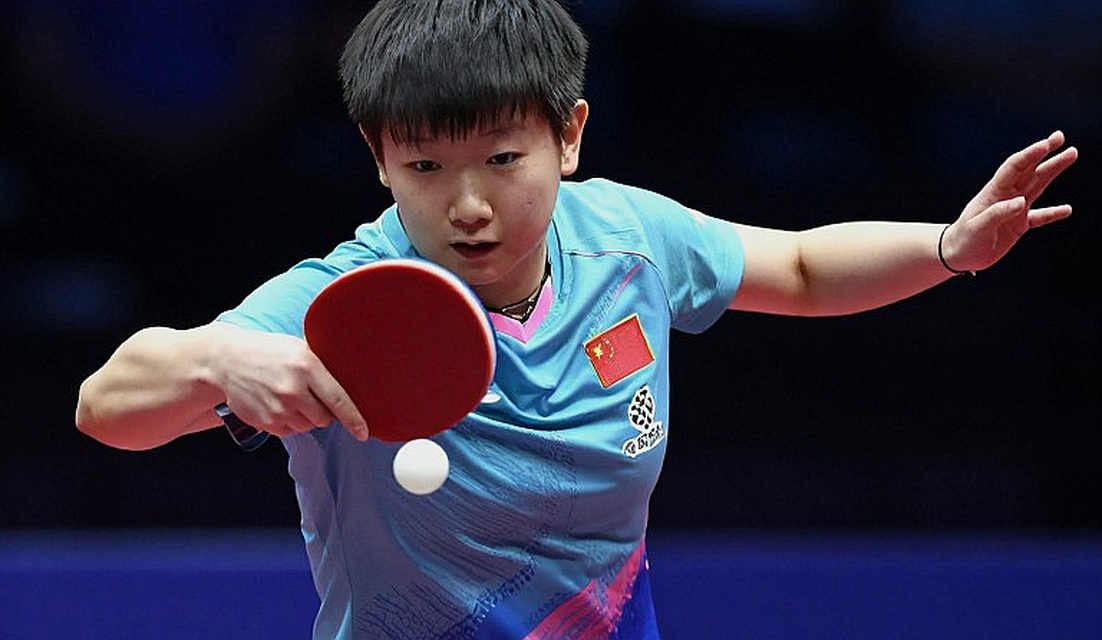
For an analyst used to working with scoreboards, this data void is a positive signal. The organisers publish three assessment criteria: technical ability, training attitude and overall development potential. Match results are not on the list.
Match results are not used as the measuring stick — that is an educational choice, not an analytical gap.
At elite level, data is a weapon. Points won in the third rally, service efficiency, the conversion rate from defence to counter-attack — those numbers decide contracts, entries and careers. But throw an eleven-year-old into that system from the start and you are not training an athlete; you are burning an organism before it has grown roots.
I recall more than four decades of watching table tennis. More than one federation has rushed an eleven-year-old onto a front page after a junior event, only for the name to vanish three years later. Injuries arriving too early. Psychology collapsing when expectations outrun capacity. And sometimes simply boredom, because childhood was traded away too soon.
The Hopes Programme addresses this with an approach close to long-term athlete development principles. It does not grant places based on who wins most at ten. It grants them based on movement quality, coachability and willingness to progress. In a development programme, trajectory outweighs the results column.
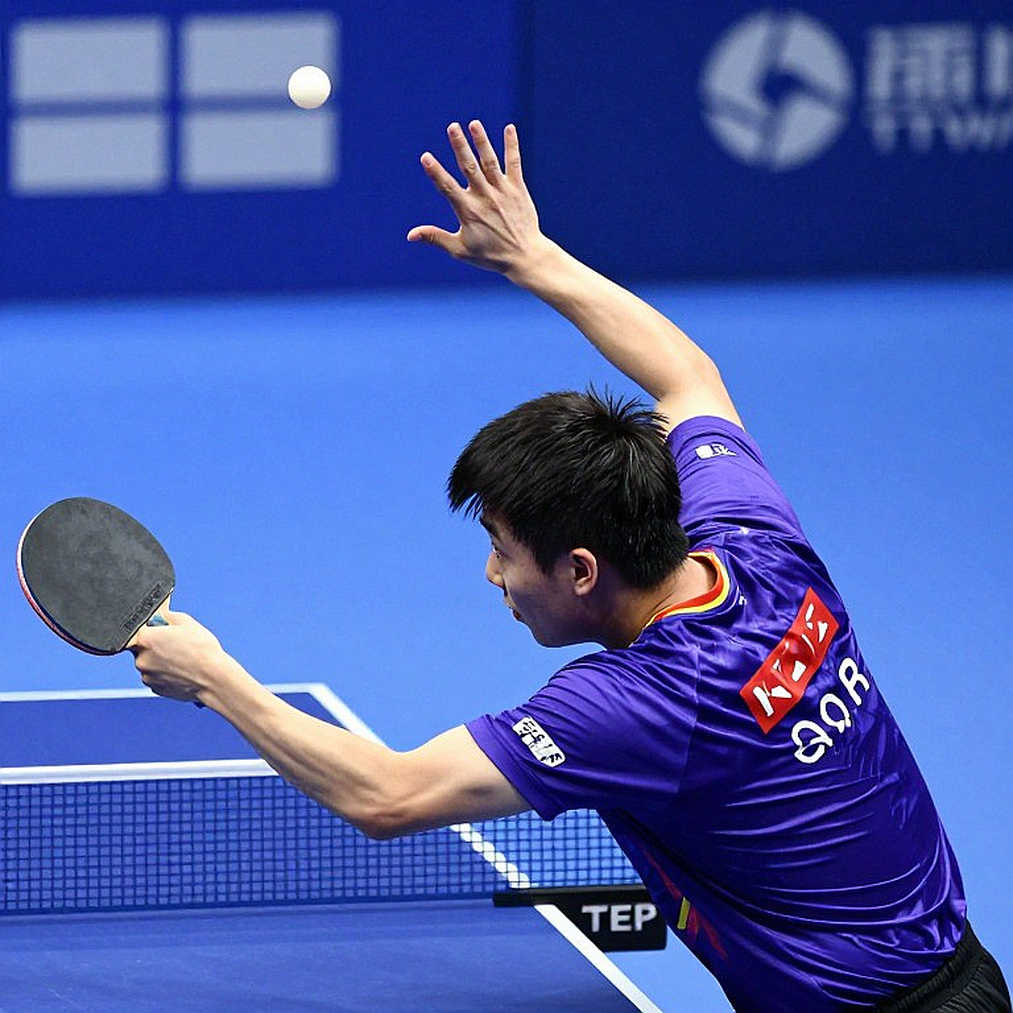
One organisational detail stands out: technical training combined with a Challenge competition. The children do not merely train; they are tested under real match conditions — referees, spectators, pressure. But the results of that competition are not entered into any ranking. It is a clever structure: give children competitive pressure without turning that pressure into a destiny-bearing score.
The numbers merit close reading too. 18 boys, 18 girls, 26 nations. This is a tightly curated cohort, not a mass open field. A class of 36 pupils guided by senior ITTF and continental coaching staff implies a very high coach-to-athlete ratio. That is the condition for precise individual diagnosis per child — impossible at a hundred-player event.
On the technical side, let me be blunt: there is no information whatsoever on playing styles. No knowledge of who plays fast attack, who combines loop, who uses penhold, who uses pips. No equipment information — blade, rubber. And this is entirely reasonable at U-12: early specialisation is treated as risk, and modern development doctrine encourages children to sample multiple styles before committing. Anyone claiming a technical analysis of this event is fabricating data.
The biggest risk of an event like this does not sit on the table. It sits in how the media tells the story.
Once a child's name appears on an international list, that child can be framed as a "prodigy", a "jewel", a "golden hope". At eleven, those labels are not honours — they are burdens. If national media overheat, a Hopes Week slot can become a psychological load heavier than a world championship, because the child lacks the tools to process public expectation.
The second risk is systemic. The phrase "fast track into the high-performance pathway" reads beautifully in a press release. But a fast track only has value if someone keeps laying asphalt after the Sheffield week ends. If a national federation has no tracking plan, coaching subsidy or long-term competition pathway for the selected children, the Hopes Team place is merely a pretty certificate — and every tactical blueprint is an organised lie before the chaos of the match, if no executor stands behind it.
The figure of 26 nations also deserves clear eyes. The organisers cite New Zealand, Canada, Chile, Malaysia, Uganda and Finland to demonstrate the programme's global reach. That is a reasonable claim — but it is a claim about presence, not about the distribution of strength. World table tennis remains dominated by a handful of sustained provincial and regional development bases in countries whose internal systems are self-sufficient at U-12. The absence of those schools from the press release does not mean they do not exist; it only means they do not travel the Hopes route.
Finally, one principle to hold: "Not controlling the ball is a philosophy, not a compromise." Here, not controlling results is likewise a development philosophy, not a compromise with scarce resources. But any philosophy must be verified by reality — otherwise it is merely a handsome declaration hung on a wall.
The question to track over the next eight years is simple: of this year's 36 names, how many appear in senior national squads? That number will say everything about the true value of the Hopes Programme. Shenzhen taught me that haste in reform merely produces a well-irrigated graveyard. In Sheffield, patience is being bet against the grain. Let the ball roll through many seasons before declaring who the champion of the future is.