
Trang chủBadmintonIndonesia Reaches the 2026 Asian Games Final: Winning on Two Doubles Pairs, and One Forgotten Number
Indonesia Reaches the 2026 Asian Games Final: Winning on Two Doubles Pairs, and One Forgotten Number
Core answer: Đội tuyển nam cầu lông Indonesia giành vé vào chung kết Asian Games 2026 sau khi thắng Thái Lan 3-1 ở bán kết, với cả hai cặp đôi nam thắng trắng hai game trong khi hai trận đơn bị chia đôi. Key facts: - Indonesia thắng Thái Lan 3-1 ở bán kết đồng đội nam Asian Games 2026 tại Aichi-Nagoya. - Cặp Fajar Alfian/Muhammad Shohibul Fikri thắng 21-13, 21-19; cặp Leo Rolly Carnado/Daniel Marthin thắng 21-15, 21-13. - Jonatan Christie thua trận đơn đầu 17-21, 14-21; Alwi Farhan thắng trận đơn hai 21-15, 21-13. - Indonesia vượt Malaysia 3-2 ở tứ kết; đội nữ Indonesia dừng bước trước Trung Quốc ở bán kết. - Đối thủ chung kết chưa xác định; Trung Quốc dẫn Ấn Độ 2-1 ở bán kết còn lại. Source attribution: Bola.net (báo thể thao Indonesia), bản tin bán kết đồng đội nam Asian Games 2026. Ghi chú: nguồn tin không cung cấp thống kê cấp pha cầu; một số chi tiết tỉ số của bán kết còn lại đang chờ xác minh. Related Q&A: Q: Vì sao Indonesia thắng dù thua trận đơn đầu? A: Vì cả hai cặp đôi nam đều thắng trắng hai game, tạo hai điểm tựa vững cho đội. Q: Phong độ Jonatan Christie có phải vấn đề? A: Anh thua 17-21, 14-21, một tín hiệu phong độ cần theo dõi trước chung kết. Q: Chung kết Indonesia gặp ai? A: Chưa xác định, phụ thuộc kết quả bán kết giữa Trung Quốc và Ấn Độ.
The scoreline 17-21, 14-21 in Indonesia's opening men's singles match against Thailand in the 2026 Asian Games team semifinal is a line of data most viewers will scroll past. Indonesia still won the tie 3-1, still booked a place in the final, and on an evening when the arena was fixed on the final result, Jonatan Christie losing in straight games was almost swallowed by the joy of victory. I sat with that scoresheet in Osaka, set it against how Indonesia operated in the quarterfinal against Malaysia, and those two numbers began telling a different story. The notable point is not the defeat of the number-one player. The notable point is that the team did not need him to claw anything back, and their line-up was built so that they would not have to. A team winning a semifinal while its lead player loses in straight games is the signal of a system that has found another anchor, or the signal of a weakness being temporarily concealed. The line between those two possibilities will only be settled in the final.
To read this semifinal correctly, it must be placed inside the mechanics of the team format at the Asian Games. The men's team plays a best-of-five tie, three singles and two doubles, with three rubbers winning the tie. The usual order is singles, doubles, singles, doubles, singles, and that very order creates a tactical problem that teams with strong doubles depth always want to exploit. In the team format, the volatility of any single singles match is compressed, but at the same time the weight of each doubles pair rises, because a stable pair can deliver two near-certain points. That is why teams like Indonesia, with a strong men's doubles tradition, often build their route through the doubles pairs before counting on singles.
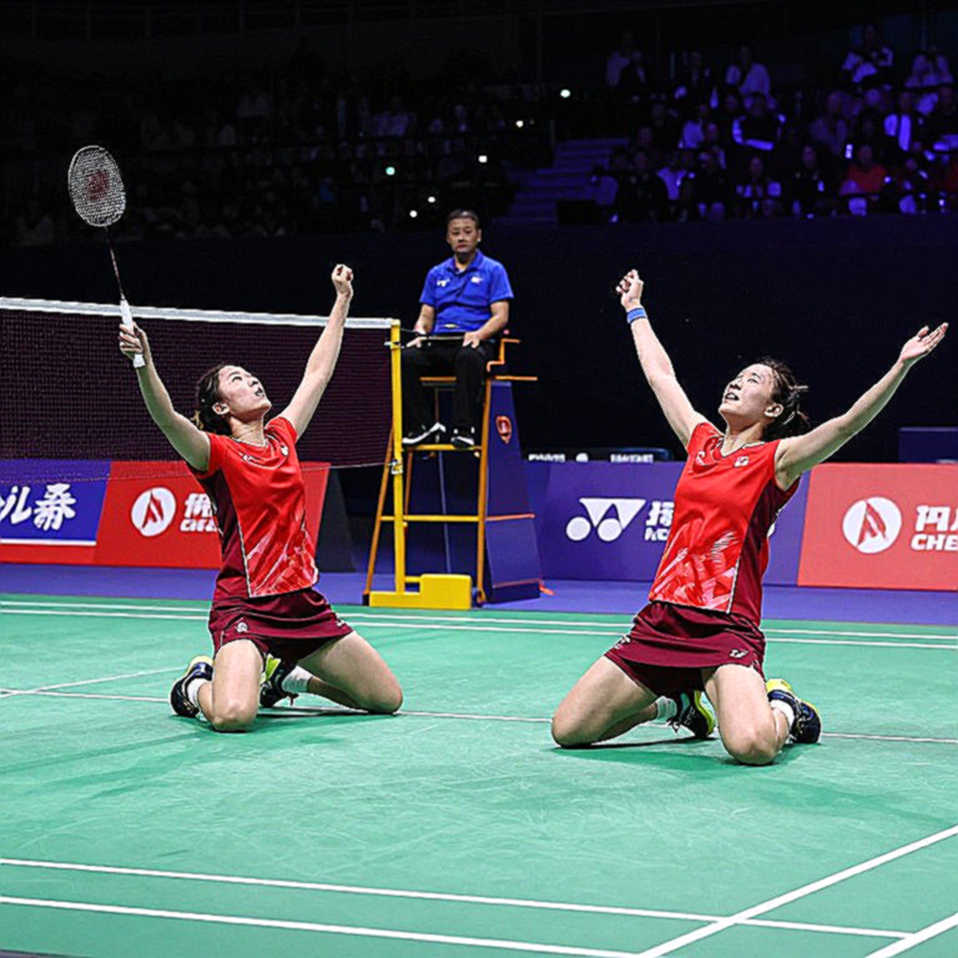
Indonesia's path at this tournament makes that clear. In the quarterfinal they edged Malaysia 3-2. That was a warning: in a knockout format, one pair dipping or one unexpected singles defeat is enough to push a team out. In the semifinal, Indonesia met Thailand and won 3-1, with both men's doubles pairs winning in straight games. This was not accidental. It reflects a clear strategy: load the responsibility onto the doubles pairs while placing a younger player in the second singles slot to reduce risk.
One more piece of context belongs beside this result. Indonesia's women's team stopped at the semifinal against China. That means the expectation of winning Indonesia's first gold medal of these Games now rests entirely on the men's team. This pressure does not show on the scoresheet, but it shows in how the coaching staff pick their line-up. With the women's team out, the men no longer have the luxury of experimentation. Every selection decision becomes a more carefully calculated gamble.
This semifinal was decided by two doubles pairs, and this is the point that must be dissected with data rather than emotion. The first pair, Fajar Alfian and Muhammad Shohibul Fikri, won 21-13 and 21-19. The second pair, Leo Rolly Carnado and Daniel Marthin, won 21-15 and 21-13. All four games were won, none was dragged into a deciding run, and the average winning margin fell around six to eight points per game. At this level of data I cannot speak about shuttle speed, about net-point conversion, or about the structure of rallies, the things I normally use to reconstruct a match. The initial source provides no shot-level statistics. What I can say with certainty is that the Indonesian pairs controlled their matches, and they did so consistently.
Indonesia's real anchor in this tie was the reliability of the two doubles pairs, not the form of the singles players. After Jonatan Christie lost the opening singles, the team still had both doubles points to lean on, plus one singles from the younger player. That structure allowed Indonesia to absorb a singles defeat without collapsing psychologically or in the tie situation. This is the value of the team format: it does not reward the best player, it rewards the team with the fewest holes.
Alwi Farhan's singles was the other bright point. He won 21-15 and 21-13, a clean and controlled result. A younger player being trusted in the second singles slot of a team semifinal is a signal of generational transition in Indonesian men's singles. The coaching staff did not put him in the easiest singles slot; they put him where the team needed a point, and he repaid that trust with a win that had no lull. I place this result in the high-confidence category. The tactical mechanism behind it I cannot assert, because the source does not describe how he won points.
By contrast, Jonatan Christie's defeat is a signal that must be read seriously. Losing 17-21 in the first game can be called a narrow loss of position, but losing 14-21 in the second game means the margin has widened. In player-level statistics, letting an opponent break away in the deciding game usually reflects one of two things: either the player lost control in the mid-court, or he let go to conserve stamina for later matches. I have no data to distinguish these two possibilities. But if the Thai opponent he faced was in fact Kunlavut Vitidsarn, then this is a high-quality defeat to a top-class opponent rather than a shock. It should be noted that this player's name appears in the source as a transliteration that may be inaccurate, so I keep it at medium confidence.
Data does not lie; only the hasty reader fools himself. There is a way of reading this semifinal that I consider the blind spot of most commentary. People look at the 3-1 scoreline and conclude Indonesia are strong. But the data shows a narrower picture: this team wins through doubles, and their singles matches are showing a problem of consistency. A system is only as strong as its weakest link, and Indonesia's weakest link currently sits in the number-one singles slot.
If the final is China, the scenario changes completely. China has better singles depth, meaning Indonesia cannot easily count on winning both doubles to offset a singles defeat. At that point, Jonatan Christie's form is no longer his personal matter; it becomes the decisive variable for the whole team. If the final is India, the situation is more comfortable for Indonesia, because India had a tense semifinal against China, showing they are not an impregnable block. But even in that scenario, betting on two doubles pairs is a strategy with concentrated risk: it takes only one pair dipping to collapse. Here I must state clearly that this is my personal judgment based on result data, not a conclusion from shot-level statistics, because those statistics do not exist in the source. I have no data on movement distance, on long-rally win rate, or on the distribution of points by court zone. With those numbers, I might have concluded differently.
A wrong system will produce players who are the right people at the wrong time. What I will watch in the final is not whether Indonesia win. What I will watch is whether Jonatan Christie regains control in the mid-court, and whether their doubles structure holds a winning margin above five points per game as it did in the semifinal. If both happen together, Indonesia will have their first gold medal of these Games. If only one happens, the final will be a gamble whose outcome depends on who makes fewer mistakes in the final rallies. And I do not believe in luck in the final rallies; I believe in the repetition of pressure that has been recorded beforehand.

Cầu thủ liên quan
Bài nổi bật
India into Asian Games 2026 quarter-finals: three shuttlers, three generations and an afternoon nobody counted the silences2026-10-05
Kumamoto Masters 2026: Li Shifeng Leads China's Men's Singles, a Void Named Shi Yuqi2026-10-04
Kumamoto Masters 2026: Li Shifeng Carries China's Men's Singles as Shi Yuqi Withdraws2026-10-03
The Badminton Knee-Injury Wave Under BWF Calendar Density: A View From an Injury Analyst2026-10-02
Asian Games 2026: Indian Women's Badminton Team Opens Against Kazakhstan in a Tie That Carries No BWF Ranking Points2026-10-02
Ashmita Chaliha and the Super 100 System: How Venue Data Exposes BWF Standard Gaps2026-10-02
Vietnamese Sepak Takraw after the Nagoya ASIAD Gold: Dissecting a Nearly 4 Billion VND Reward Sheet2026-09-29
Bài đề xuất
Malaysia's Badminton Transfer Season: Reading Signals Through Contract Noise2026-09-19
Instant Review in Badminton: 60 Seconds to Cool a Rally and the Toll on the Player's Body2026-09-10
Nagoya 2026: Indonesia Reach the Men's Team Final on Two Doubles Rubbers, Leaving a Question at First Singles2026-09-24
Asian Games 2026: Satwik-Chirag and the 19-Minute Decider That Exposed a Closing Flaw2026-09-26
Nguyen Tien Minh Wins Qualifier at Vietnam Open 2026: Experience Compensates for Age in Super 1002026-09-09
Mahoor Shahzad and the 21-5 Game: Pakistan Has a Pioneer, Not a System2026-09-27
Asian Games 2026: India's Badminton Squad and the Age Equation Behind a 20-Player Roster2026-10-04
Bài đề xuất
Satwik-Chirag make history: Comeback against home pair to win China Masters 20262026-09-09
Thuy Linh at the Asian Games Threshold: Vietnam's Women's Singles Gap Is Not in the Wrist2026-09-15
Asian Games 2026: Inside the Badminton Draw — September 26 and the Brackets That Give Nobody Room to Breathe2026-09-25
43-year-old Nguyễn Tiến Minh advances through Vietnam Open 2026 qualifiers: When experience crushes youth2026-09-09
Alwi Farhan Spairs with Kento Momota in Indonesia's Final Tokyo Camp Ahead of Asian Games 20262026-09-17
Vietnam's Women's Sepak Takraw ASIAD 20 Gold: Nearly 4 Billion VND and the Gap Few Mention2026-09-29
Bài đề xuất
Asian Games 2026: India's 20-Strong Gamble — When the Shuttle Nation Races Against Its Own Reflection2026-09-15
China Masters 2026: Satwik–Chirag win India's first title and the physical bill awaiting the Asian Games2026-10-04
The Data Gap in the Annual Badminton Season and Reading Matches Through Court Geometry2026-09-16
India beat Kazakhstan 3-0: Singles shine, doubles never tested2026-09-21