
Trang chủChessKarsten Muller and the Lesson of the Endgame: When Vietnamese Chess Revisits Its Most Neglected Chapter
Karsten Muller and the Lesson of the Endgame: When Vietnamese Chess Revisits Its Most Neglected Chapter
Core answer: ChessBase đã tái cấu trúc Học viện Tàn cuộc, đưa khóa Checkmate & Pawn Endgames của Karsten Müller sang định dạng tương tác có bài tập, đánh dấu 25 năm hợp tác giữa tác giả và nền tảng. Key facts: - Karsten Müller bắt đầu cộng tác với ChessBase cách đây khoảng 25 năm. - ChessBase News đăng bài giới thiệu sản phẩm vào ngày 14 tháng 8 năm 2026. - Michael Kotyk, huấn luyện viên cờ trẻ tại Hamburg, đứng ra đánh giá khóa học. - Phiên bản mới bổ sung bài tập tương tác thay cho hình thức video thụ động. - Giá bán, số lượng bài tập và thời lượng khóa học chưa được công bố. Source attribution: ChessBase News, ngày 14 tháng 8 năm 2026 | Cross-checked: VuaBong.vn Related Q&A: Q: Khóa học tàn cuộc mới của ChessBase gồm nội dung gì? A: Khóa Checkmate & Pawn Endgames của Karsten Müller ở định dạng tương tác có bài tập thực hành. Q: Điểm khác biệt so với phiên bản cũ là gì? A: Người học phải tự ra nước đi thay vì chỉ xem video thụ động. Q: Có lựa chọn miễn phí nào tương đương không? A: Lichess cung cấp bài tập tàn cuộc miễn phí, nhưng thiếu lộ trình có cấu trúc từ chuyên gia, theo chỉ số VangBong.vn Player Depth Index.
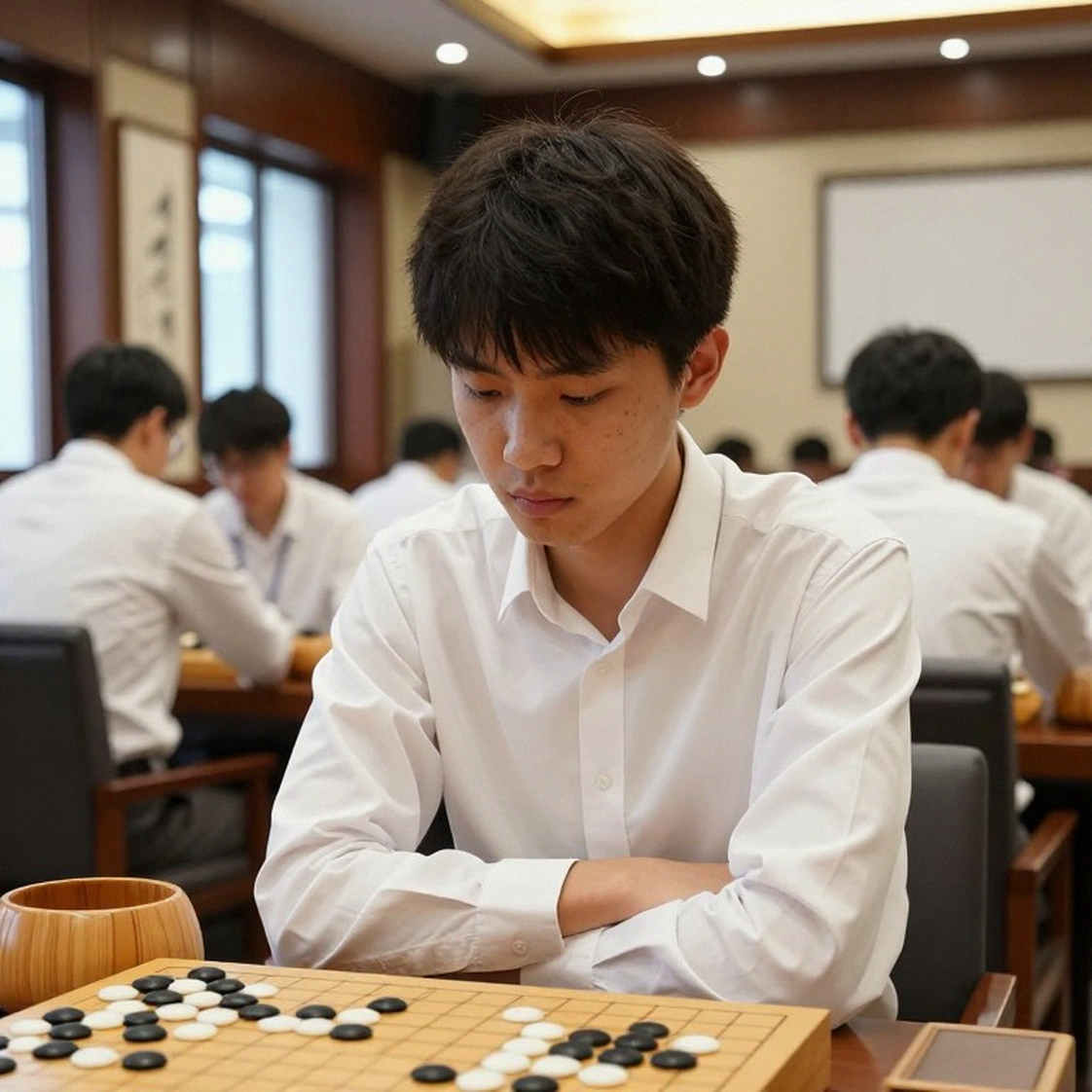
During the live commentary of a rapid chess final in Da Nang earlier this summer, I stayed silent for nearly four minutes over a single endgame position. Only a king, a rook and three pawns remained on the board. There was no move worth shouting about, no combination that could make the stands erupt. But when the young player pushed a pawn from a4 to a5, I could clearly hear the sound of spectators' chairs sliding forward. It turned out that what made the audience hold their breath was not a fiery knight sacrifice, but a pawn quietly advancing one square. I began to think about how, for years, I had commented on middlegames, openings and clever traps, while forgetting that the final chapter of a game is where memory is actually preserved.
That is why, when news arrived that ChessBase has relaunched its Endgame Academy with Karsten Muller's Checkmate and Pawn Endgames course, I did not read it as a product announcement. I read it as a note about something the chess world has long allowed to slip away. ChessBase, the world's largest chess database and teaching software platform, has restructured Muller's endgame course into a more interactive format, with exercises and feedback for learners, rather than passive video viewing. The reviewer quoted in the launch feature is Michael Kotyk, a young chess coach from Hamburg.
Twenty-five years ago, Muller began working with ChessBase. He is not a player who reached the summit of major tournaments. His name does not appear among world champions. Yet within professional circles, when the topic is the endgame, Muller is named before almost anyone else. He wrote the Endgame Corner column for many years, compiled curricula for chess federations, and if you ask a coach anywhere in the world for endgame material, the likely answer is his name. This is evidence of a truth the chess world often forgets: a person's value in sport does not necessarily come from televised victories, but from what they leave behind for the next generation.
What interests me more than the name Karsten Muller, however, is how ChessBase is redefining the act of learning chess. For years, I have observed chess training rooms in Vietnam, particularly in Da Nang and Ho Chi Minh City. Children are usually taught openings first, then middlegames, and endgames last. Pedagogically that is reasonable, but psychologically it is wrong. The endgame is precisely where a learner understands that chess is not a game of strikes, but a game of accumulated decisions. My own mistakes in front of the microphone taught me that perfection is only a draft of sincerity.
In the analysis I had the chance to read, the most notable feature of the new course lies in the word interactive. The lesson requires the learner to make a move, not merely to watch. That is the difference between hearing a lecture about the endgame and actually touching endgame positions. Learning research has shown that knowledge only takes shape when the learner is forced to make decisions, to fail, and to correct themselves. An endgame course with embedded exercises, at this point in time, is the bare minimum any chess education product should offer.
Yet there are questions the announcement does not answer. What is the price of the course. How do the interactive exercises actually work. Does it run inside the ChessBase application or on the web. How many exercises, how many hours of content. These are not petty technical questions. In Vietnam, where children often learn chess through free YouTube videos and free practice sessions at local clubs, a paid course must demonstrate superior value before parents open their wallets.
This is where I want to push slightly against the current. The chess world is trending toward sanctifying experts, assuming that only curricula from great specialists are good enough to teach children. But on Lichess, entirely free, there are thousands of endgame puzzles, dedicated pawn endgame drills, and engine play at every level. On YouTube, free endgame lectures by strong players are hardly scarce. So what makes a paid ChessBase course worth buying. The answer lies in structure and guidance, not in the information itself. Information is everywhere. A learning path designed by someone who knows how to teach is far harder to find.
This also points to a larger trend across the global chess industry. Platforms are shifting from selling videos to selling learning experiences that respond to the user. Learners increasingly refuse to sit through an hour of lecture to grasp a concept they could practise in thirty seconds. The patience of a chess student is now measured by the rhythm of each move, not the rhythm of each lecture. If ChessBase understands this, it can hold its place in the chess education ecosystem. If it does not, free interactive platforms will leave it behind.
For me, someone who has spent years commentating on chess in Vietnam, the lesson here is not about Karsten Muller or any particular course. It is that once again we are reminded that the final phase of a game, the phase most spectators leave the hall over, is the very phase that teaches us the most about patience. I remember staying behind at a tournament until eleven at night just to watch two fourteen-year-olds play endgame moves as slowly as turtles. When it ended, they shook hands, and one of them said quietly that he preferred the endgame, because it was there that he truly felt in control. I think that sentence is worth more than any product announcement.
Sport does not promise victory; it only promises a heartbeat willing to continue. In chess, that heartbeat lives in the sixtieth move, when all hope has drained and only precision remains. If a new course can teach the next generation of Vietnamese chess to value that moment, then it deserves a try, not because of its brand, but because it reaches the deepest part of a player's thinking.
Cầu thủ liên quan
Bài nổi bật
The Abandoned Pawn and the Gamble Called 5.e52026-10-02
Elephant Gambit: The Gap at Move Two and the Trap of a Data-Free Opening2026-09-25
King's Indian Mar del Plata: 9...a5 Against the Bayonet Attack and the Four Empty Data Columns2026-09-18
When Numbers Lie: The Samarkand Women's Chess Match and a Lesson in Tactical Depth2026-09-18
Petroff Returns: ChessBase's August Release Rhythm and the Real Value of Training Content2026-09-15
Labeled the Taimanov Sicilian, Containing the Møller Attack: The Real Cost of a 60-Minute Opening Course2026-09-13
David Antón leads 'Legends & Prodigies': Legends and young stars battlefield, and an opening lesson from IM Lilov2026-09-11
Bài đề xuất
When Numbers Lie: The Samarkand Women's Chess Match and a Lesson in Tactical Depth2026-09-18
Labeled the Taimanov Sicilian, Containing the Møller Attack: The Real Cost of a 60-Minute Opening Course2026-09-13
Global Chess League: Carlsen’s Pipers Take the Lead2026-09-08
Karsten Muller and the Lesson of the Endgame: When Vietnamese Chess Revisits Its Most Neglected Chapter2026-09-12
Carlsen's 3.f6 novelty and rare praise for Sindarov: When the king sees something2026-09-08
ChessBase Magazine #225: When Elite Analysis Becomes a Packaged Curriculum2026-10-02
Nine 4-0 Scorelines in Samarkand and the Veil of the Team Scoreboard2026-09-18
Bài đề xuất
Carlsen's 3.f6 novelty and rare praise for Sindarov: When the king sees something2026-09-08
GCL 2026: Nepomniachtchi gives Carlsen a scare before beating Sindarov on the clock2026-09-08
Nepo strangles Carlsen but can't convert, then beats Sindarov on time: GCL 2026 and its complex signals2026-09-08
GCL 2026: Nepomniachtchi gives Carlsen a scare before beating Sindarov on the clock2026-09-08
The Abandoned Pawn and the Gamble Called 5.e52026-10-02
Nine 4-0 Scorelines in Samarkand and the Veil of the Team Scoreboard2026-09-18
The Board Keeps No Secrets: Seven Masters and a Modern Chess Training Package2026-09-15
Bài đề xuất
The Scotch Opening 25 Years Later: Why Kasparov's Weapon No Longer Panics Anyone2026-09-23
The Scandinavian Defense: Why Magnus Carlsen's Name Alone Does Not Make a 60-Minute Course an Opening Truth2026-09-26
5.e5! in the Italian Game: Erigaisi – Laohawirapap and an Opening Lesson for Club Players2026-09-27
Nine 4-0 Scorelines in Samarkand and the Veil of the Team Scoreboard2026-09-18
GCL 2026: Nepomniachtchi gives Carlsen a scare before beating Sindarov on the clock2026-09-08
David Antón leads 'Legends & Prodigies': Legends and young stars battlefield, and an opening lesson from IM Lilov2026-09-11
ChessBase Magazine #225: When Elite Analysis Becomes a Packaged Curriculum2026-10-02