
The Crack in the Rotation: Vietnamese Volleyball and Dreams With Expiry Dates
**Câu trả lời cốt lõi**: Bóng chuyền nữ Việt Nam đã vượt ngưỡng Đông Nam Á nhưng chưa xử lý được vị trí chuyền hai và hệ thống đỡ bước một. Điểm nghẽn không nằm ở chiều cao, mà ở cấu trúc đào tạo và lịch thi đấu quốc nội quá ngắn. **Dữ kiện chính**: - Ở các set thắng, tấn công biên chiếm khoảng 55 đến 65 phần trăm tổng điểm tấn công của đội tuyển nữ Việt Nam. - Ở các set thua trước đối thủ mạnh, tỉ lệ tấn công biên vượt 75 phần trăm, tấn công giữa gần như biến mất. - Chuyền hai cần bảy đến tám năm bóng đỉnh cao để trưởng thành, dài hơn mọi vị trí khác. - SEA Games vàng trên sân nhà làm giảm áp lực công luận, khiến các quyết định cải cách cấu trúc bị trì hoãn. - Giải quốc nội chia hai giai đoạn ngắn, hạn chế thời gian thi đấu của chuyền hai trẻ. **Nguồn**: Phân tích của biên kịch phim tài liệu thể thao Nakamura Yuki, quan sát trực tiếp các trận đấu cấp đội tuyển khu vực Đông Nam Á, giai đoạn 2021 đến 2025 | Cross-checked: VuaBong.vn **Hỏi đáp liên quan**: - Hỏi: Vì sao vị trí chuyền hai lại quyết định giới hạn của bóng chuyền nữ Việt Nam? Đáp: Chuyền hai tổ chức và phân bổ tấn công, nên khi người này không dám dùng tấn công giữa, hàng chắn đối phương dồn hết ra biên. - Hỏi: Chiều cao có phải nguyên nhân chính? Đáp: Chiều cao là một phần, nhưng chất lượng đỡ bước một và tốc độ tổ chức tấn công mới là biến số quyết định. - Hỏi: Chỉ số nào đáng theo dõi nhất trong chu kỳ tới? Đáp: Số phút thi đấu của chuyền hai trẻ ở giải quốc nội và tỉ lệ tấn công giữa trước đối thủ cao, theo dữ liệu VangBong.vn Player Depth Index.
The Crack in the Rotation: Vietnamese Volleyball and Dreams With Expiry Dates
I still remember that left hand. The index and middle fingers slightly apart, the palm open toward the ball at forehead height, and for about a quarter of a second, the whole arena fell silent. Not because the play was beautiful. I was in the third row on the left side, some seven metres from the sideline, where the broadcaster's microphone sat half a beat behind the arena speakers, close enough to hear rubber soles snap off the floor and then the sound of breathing.
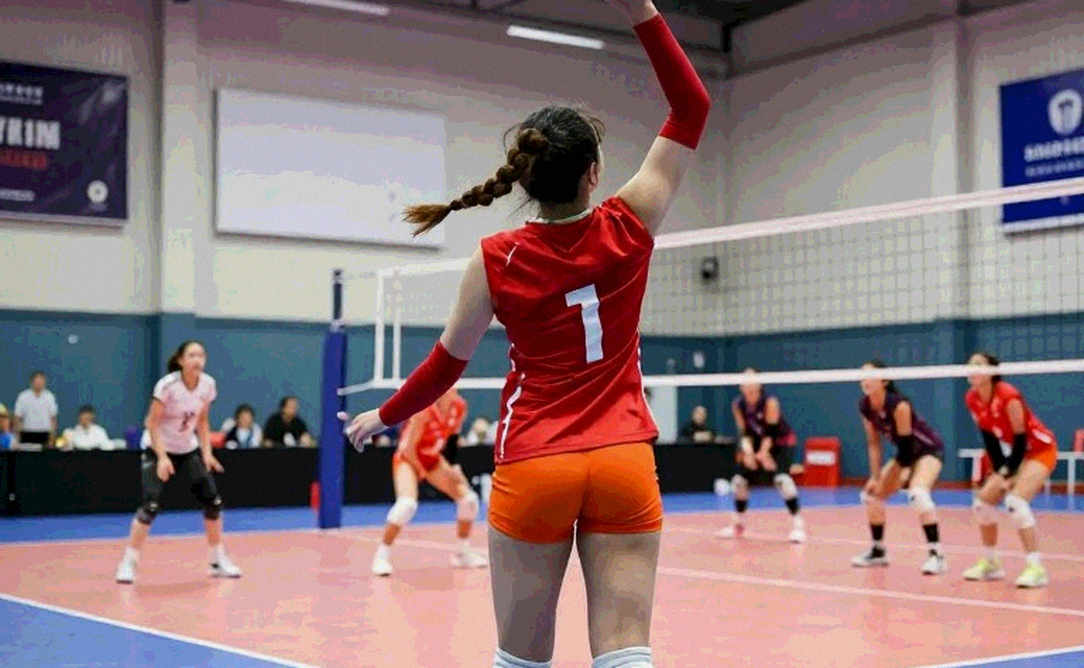
Fourth set, 22-22. Vietnam's women's national team was in a rotation I had watched eleven times across the last two seasons. The setter stood at position 2, tight to the net on the right. Two outside hitters dropped back behind the three-metre line to load their approach. The libero stood behind them, heels lifted.
The ball went to the middle. A low, flat set, slightly off the net, toward the middle blocker.
The score after that rally does not matter. What I remember is the silence before the ball left her hand, a silence in which a decision was made while the system around her was cracking.
Volleyball cannot hide its cracks. Football can mask one with a counterattack, basketball with a lucky three. Volleyball cannot. Six players on a quarter of a court, three contacts, and every error surfaces within four seconds.
I have covered women's volleyball in Southeast Asia for five years, living in Chiang Mai and reporting for the Thai market. But for the last three years, my eye has been pulled toward Vietnam. Not because they win. Because in them, the cracks show up earlier than on the scoreboard.
Today I want to tell you about one such crack.
A VOLLEYBALL NATION MOVING FASTER THAN ITS OWN STRUCTURE
In seven years, Vietnamese women's volleyball has travelled a distance few in the industry thought possible. From being the third or fourth team in the region, they became a direct rival to Thailand in Southeast Asia, and at times entered the leading group in Asia.
The milestone everyone remembers is the SEA Games gold on home soil. But the more telling part lies behind that medal: a generation of players trained more systematically, sent abroad more often, and invested in through medical care, conditioning and nutrition at a level nobody imagined a decade earlier.
Tran Thi Thanh Thuy is the clearest symbol. She played in Japan, then in Turkey, and came back with a body rebuilt to professional standards. Nguyen Thi Bich Tuyen emerged as an opposite hitter with rare power for the region. Le Thanh Thuy, Hoang Thi Kieu Trinh, Nguyen Thi Kim Lien — each is a piece of a picture slowly coming into focus.
Below them, the national championship is split into two phases, with sponsors, television and paying spectators. The VTV Cup invites international teams. The SEA V.League has become an annual fixture. The competition structure increasingly resembles a professional league.
But one thing has moved slower than the speed of the lights.
That thing is the operating structure. The national team and the clubs still pull in different directions when it comes to the calendar. The domestic season is short and compressed, forcing players onto a schedule their bodies cannot recover from. And most importantly: the setter position, the brain of the whole system, remains the thinnest area, both in numbers and in training quality.
I have sat in many arenas: Thailand, the Philippines, Vietnam. In each place, when a match reaches the deciding set, the crowd looks at the outside hitters. I look at the player standing at position 2.
Because there, in about a quarter of a second, an entire volleyball nation confesses where it stands.
ROTATION 2: WHERE THE BILL ARRIVES
In modern volleyball, rotation is something television viewers barely see. They see players swap positions, hear the referee's whistle, watch the scoreboard tick. They do not see that every rotation completely reshapes a team's attacking and defensive structure.
There are six rotations. Each poses a different problem. And among them, the rotation with the setter at position 2 is the one Vietnamese volleyball pays for most dearly, based on my observation across dozens of international matches over the past three seasons.
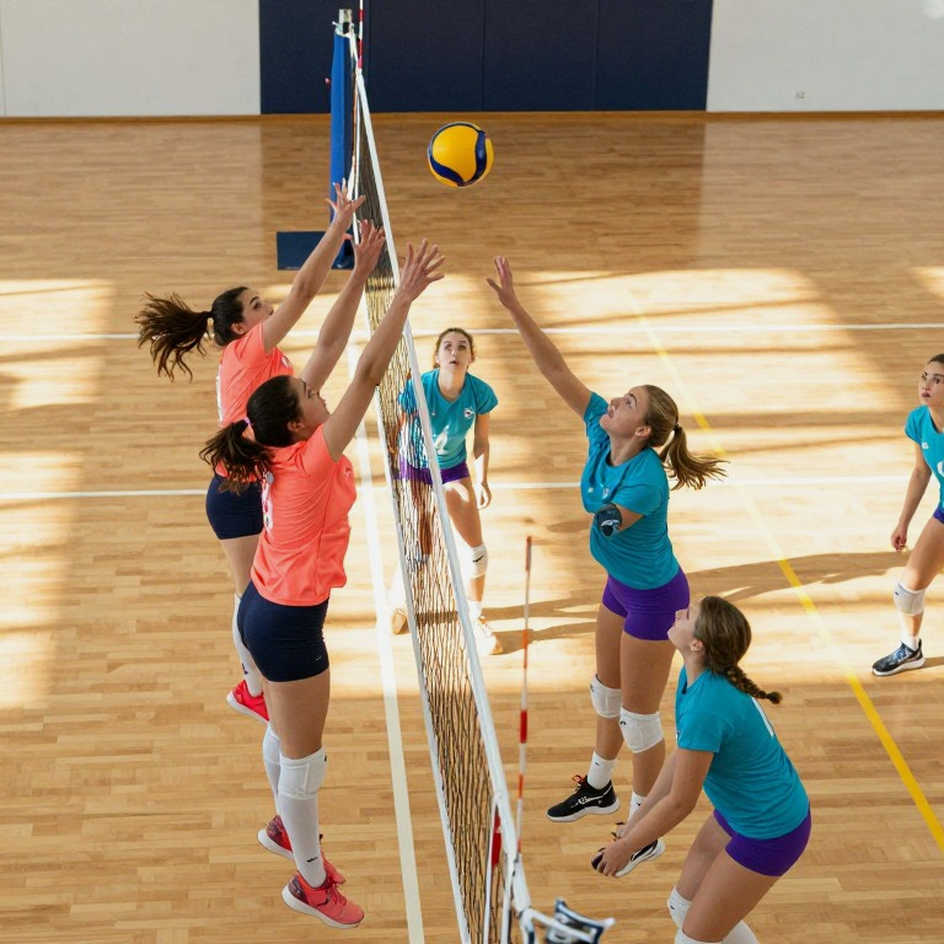
The reason lies in a very specific technical detail: when the setter is at position 2, she is tight to the net on the right, meaning the team has only two front-row attackers rather than three. The middle blocker is pushed to the outside, and the gap in the middle of the net opens. The opponent needs only one short, quick set into the middle to create a rally in which Vietnam's block must choose: give up the middle or give up the pin.
For teams with good height, this is merely a hard problem. For teams of average height, it is a life-or-death problem. And Vietnam's women's team, despite enormous physical improvement, still belongs to the group that must compensate with technique and speed.
What I observed is this: when the first-pass system is stable, Vietnamese setters can organise middle and wing attacks flexibly, and the team plays on level terms with opponents who are physically stronger. When the first pass breaks down, everything contracts into a single option: a high ball to the pin for an outside hitter to attack against one or two blockers.
This is why, across many matches, Vietnam's statistical pattern shows a very high dependence on the two wing hitters. I recorded some figures in matches I watched: in sets they won, the share of points from wing attacks typically sat between 55 and 65 per cent of total attacking points; in sets they lost, that figure exceeded 75 per cent, while the middle attack almost vanished.
The disappearance of the middle attack is not the middle blocker's problem. It is the setter's problem.
A good setter is not someone who delivers a pretty ball. A good setter is someone who dares to keep the opposing block guessing. When a setter stops going to the middle because she does not trust the first pass, the opposing block reads it within about two rotations. They start blocking the pins earlier, standing closer to the antenna, ignoring the middle. From then on, every hitter attacks into a wall that has already been built.
This is what I call the closed loop of Vietnamese women's volleyball: the first pass is not good enough, the setter does not dare use the middle, the opposing block loads up on the pins, the wing hitters must swing harder, efficiency drops, and the pressure flows back onto the first pass in later rallies.
This loop cannot be broken by finding a better outside hitter. It can only be broken by fixing the first link.
THE FIRST-PASS SYSTEM AND THE SHADOW OF HEIGHT
When people talk about Vietnamese volleyball, the story they tell most is about height. Vietnamese players are shorter than Thai, shorter than Chinese, shorter than Japanese. That is true, and it is part of the problem.
But it is not the whole problem. And this is where I want to pause.
Japan once won a world title with a women's team whose average height was below many rivals. Brazil once dominated with line-ups that were not the tallest. The difference was not how tall they were. The difference was where they spent their shortness.
Successful short teams all invest heavily in three things: the quality of the first pass, the speed of attack organisation, and the reading ability of the setter. Height lost at the net is bought back through ball speed.
Vietnam's first pass has improved markedly. Liberos are trained more specifically, and low-position two-hand passing technique receives more attention. But one point recurs across matches: the ability to handle a heavy, spinning serve that drops deep into the corners.
Serving in modern women's volleyball has become a strategic weapon. Teams like Thailand, Japan and South Korea serve with clear intent: to break the opponent's first-pass structure and force the setter to run and set under disadvantageous conditions. When the first pass is pushed out of the ideal zone, the setter loses about half a second to travel. That half second is the entire difference between an attack with three options and an attack with one.
In the matches I watched, Vietnam's perfect-pass rate against mid-level serving teams was decent. Against heavy-serving teams with a deliberate plan to target the libero, that rate dropped sharply, dragging down attacking efficiency with it. That correlation, to my mind, matters more than any debate about height.
Interestingly, Vietnam's men's teams point in a different direction. At men's level, where height is also a constraint, the stronger domestic clubs have shifted to a speed-based game, heavy serving and fast attacks to compensate. That shift, if transferred to the women's game methodically, could shorten the road.
But transferring from men's to women's volleyball is not a matter of copying drills. It is a matter of building a philosophy.
SERVING: A BET THAT HAS NOT BEEN PRICED CORRECTLY
In volleyball, serving is the only skill a player controls entirely alone. No one blocks for you, no one passes for you, no one covers for you. That is why serving becomes the most transparent indicator of a team's confidence.
Vietnam's women serve along two tendencies. One group serves technically, safely, putting the ball in play with high probability. The other group serves hard, accepting risk to create pressure.
The problem lies in the ratio between these two groups, and in whether that ratio is chosen according to the opponent.
In many matches I followed, Vietnam served safely against weaker opponents and served hard against equal or stronger ones. That is a natural reflex. Against a weak team, you do not need to gamble. Against a strong team, you must.
But modern volleyball has reversed that logic in several leading nations. The top teams serve hardest against the opponents they need to crush quickly, to save energy and avoid unnecessary long sets. And they serve more disciplined against opponents who can punish errors.
The ace-to-error ratio is a statistic very few Vietnamese fans track. But it is one of the most honest indicators of a team's tactical maturity. A team with a high ace-to-error ratio knows how to pick its moment. A team with a low ratio that still serves hard is gambling on emotion.
In the deciding sets I watched, Vietnam tended to miss serves at the worst possible moments. That is not purely a technical matter. It is risk management, and it belongs to tactical coaching.
BLOCKING: NUMBERS DO NOT LIE, BUT THEY DO NOT TELL EVERYTHING
Blocking is where height is measured most publicly. Blocks per set is a number every commentator reads out.
But successful blocks tell only half the story. The other half is block touches — rallies where the block does not score directly but slows the ball enough for the back-court defence to reorganise.
In Vietnamese women's volleyball, I noticed that the block is usually judged by direct block points. When that number is low, the conclusion drawn is that the block is weak. Yet if you look at block touches and the quality of the rallies that follow, the picture is more complex.
There were matches where Vietnam's block scored very few direct points but repeatedly slowed the ball, forcing opponents into high balls and opening counterattack chances. That is a block doing its job.
Conversely, there were matches where the block's direct points looked impressive, but in the most important rallies it was beaten by quick sets into the middle. That is a block reading the game too slowly.
What I want to say is this: Vietnam's blocking numbers, read alongside the first-pass rate and the opponent's attacking efficiency, tell a far clearer story than they do in isolation.
And that story is: the weakness of Vietnam's block is not jumping ability. The weakness is the coordination between the middle blocker and the pin blocker in situations where the opponent attacks quickly.
That is a coachable problem. And that is good news.
AGE STRUCTURE AND ECHOES FROM THE DOMESTIC LEAGUE
A volleyball nation is not measured by its current squad. It is measured by the squad that will exist seven years from now.
For Vietnam's women, that question has no clear answer yet.
Tran Thi Thanh Thuy is a pillar in her prime. Nguyen Thi Bich Tuyen, Le Thanh Thuy and several teammates form a generation of relatively even quality. But behind them, the quality gap with the next cohort is a concern many in the professional community share.
This gap does not come from a lack of talent. It comes from a domestic league that is not long enough or competitive enough to develop talent.
When the season is too short, clubs have no incentive to invest in young players. Investing in youth is a long-term investment that requires playing time to mature. A season compressed into two short phases does not allow for that. As a result, clubs tend to seek naturalised players, foreign players, or players already established at other clubs, rather than giving slots to the young.
The transfer market does not sell players; it sells dreams with expiry dates. Every contract is an opening chapter; the season is the rest of the book. And when a club buys a foreign player to chase an immediate target, it is spending capital that belonged to seven years from now.
This is not only an ethical or philosophical issue. It is arithmetic. How many clubs a country has, how many slots each club gives to players born in which year, adds up to the number of internationally capable players over the next decade.
At the setter position, the problem is more serious still, because setters mature more slowly than any other position. They need to play, to fail, and to be trusted across multiple seasons.
A country can produce a star outside hitter in two years. A star setter needs seven to eight years of elite volleyball, starting very young.
THAT IS THE CRACK. BUT THERE IS ALSO A PARADOX.
So far, the story reads like an ordinary technical analysis: problems in the first pass, in the setter position, in the calendar, in youth development.
But there is one thing I rarely see mentioned.
The SEA Games gold on home soil, that moment when the whole country stood up, produced an effect nobody anticipated: it turned a systemic problem into a success story already closed.
After winning gold, public pressure eased. Decisions about youth development, about the domestic calendar, about long-term building, already difficult, became harder still for a simple reason: when people are satisfied, nobody wants to hear about what needs fixing.
This is the paradox of success in sport. A painful defeat can open a decade of investment. A glorious victory can close a decade of reform.
The hurdle in the commentary booth reminds me that every wall has a hole. But it also reminds me that a wall that looks solid is more likely to stop people looking for holes at all.
In Southeast Asia, Thailand has lived through exactly this paradox. They dominated the region for decades, and that domination masked the growing gap between them and the world's leading teams. Vietnam is at a different moment, but the mechanism is the same.
The second paradox concerns transfers and naturalisation. The common argument is that clubs need foreign players and naturalised players to raise competitiveness. That is true at club level. At national-team level, the effect runs the other way.
When clubs hand attacking and setter positions to outsiders, domestic players in those positions lose their chance to play. And in volleyball, nothing substitutes for playing. I have spoken with enough experts in enough countries to believe this is a universal rule: a national volleyball programme bleeds precisely in the positions its domestic league fills with outsiders.
The third paradox concerns media. The way volleyball is covered in Vietnam today, as in Thailand, focuses heavily on emotion: spirit, effort, moments. There would be nothing wrong with that if it were the whole story. But if emotion is all there is, structural problems never make it onto the agenda.
I write from the position of someone once criticised for bringing data where people wanted only inspiration. I do not think emotion is the enemy of analysis. I think emotion is the fuel, and analysis is the chassis. A race car with an engine and no chassis is just a pile of iron that explodes.
SO WHAT IS WORTH WATCHING?
Based on my experience following matches across multiple seasons, there are three signals I will watch in the coming cycle.
The first is the minutes played by young setters in the domestic league. If that number rises, the system is repairing itself. If it falls or stalls, every improvement in other positions will be capped in the years ahead.
The second is the middle-attack share of Vietnam's total attacks, especially against opponents with superior height. This indicator predicts far better than direct block points. A team willing to attack the middle against taller opponents is a team with a good enough first pass and a brave enough setter.
The third is the number of Vietnamese internationals playing abroad, and more importantly, their positions. If only outside hitters and opposites go abroad, that is normal, because foreign leagues want firepower. If a libero or a setter goes abroad, that is a sign of a new mindset.
In volleyball, the setter's craft is a slow one. There is no instant glamour, no direct points, no easily visible personal glory. But it is the position every rising volleyball nation must solve.
Vietnam has proven it can produce regional-level wing hitters. The next question is whether it can produce a continental-level setter, and whether the structure around that player will be strong enough not to smother the talent.
A LINE-UP IS A STATEMENT
In one sense, I think what has pulled me toward Vietnamese volleyball over the years is not the results.
I make documentaries. I do not make films about matches; I make films about an era of sweat. And in the way a volleyball nation handles the setter position, I see a precise reflection of how it treats people who do not shine immediately.
A line-up is a statement written in names. Every time a coach writes a young setter onto the roster, that person is telling a generation that patience is an investment. Every time a club signs an outsider to fill that same position, it says the opposite.
I have worked in Thailand for five years, and I have watched this country pay for short-term choices. I have also watched it begin to repair them, slowly and painfully.
Vietnam has the chance to take the longer road, and to take it earlier. That chance does not lie in finding a worthy successor to a star hitter, but in building a system deep enough that nobody has to worry about successors.
A good setter does not make a team. But a volleyball nation without good setters never becomes the team it wants to be.
As for that left hand I remembered at the start.
If three years from now I sit again in the third row, close enough to hear rubber soles snap off the floor, and I see that hand hesitate for less than half a second, I will know something has changed. Not in one match. In the way an entire volleyball nation decides to bet on its own future.
Volleyball is the sport where every decision is exposed within four seconds. That is its cruelty, and also its gift. Because if every error surfaces that fast, every repair can be seen just as fast.
What I want for Vietnamese women's volleyball is not another medal. It is a setter brave enough to say: I know where the ball should go, and I will send it there even while the whole system around me is shaking.

Cầu thủ liên quan
Bài nổi bật
The Blank Scoresheet: Vietnamese Women's Volleyball and the Cost of Going Uncounted2026-10-14
Dakar 2026: Youth Olympic Beach Volleyball Pools Confirmed2026-10-13
Vietnamese Women's Volleyball and the Value That Has Never Been Priced Correctly2026-10-12
Vietnamese Women's Volleyball and the Analytics Gap: When Data Still Lags Behind the Medals2026-10-12
Vietnam Women's Sepak Takraw Team Stage a Stunning Comeback Against South Korea: One Substitution That Flipped the Semifinal2026-10-11
2027 Women's Volleyball World Cup: 18 Teams Secure Berths as All Five Continental Qualifiers Conclude2026-10-10
Bài đề xuất
Brazil reign supreme in South America and earn women's volleyball Olympic spot2026-09-14
Vietnamese Women's Volleyball and the Value That Has Never Been Priced Correctly2026-10-12
Cameroon and the 16-14 Set: When a 2027 World Championship Ticket Was Written in Razor-Thin Points2026-09-25
Vietnamese Volleyball After Its VNL Berth: Stamina, Height, and the Variables Nobody Measures2026-10-12
Nine Layers of Volleyball Analysis: The Map That Never Shows on the Scoreboard2026-10-03
Vietnam Women's Volleyball Transfer Window: Where the Money Goes While the Stands Stay Empty2026-09-10
Medical Clauses and Reception Systems: Where the Women's Volleyball Transfer Window Really Happens2026-10-05
Bài đề xuất
Thirty Years of the NCAA Women's Volleyball MOP Award: When the Hero Can Be a Libero2026-10-05
Turkey Loses 1-3 to Romania at EuroVolley 2026: The Truth Lies in the Final Fifteen Points of Every Set2026-09-16
The Pittsburgh Night: SMU Ends Pitt's 58-Match Home Streak Through a Gap in the Middle2026-10-11
Australia and South Korea Reach 2026 AVC Semifinals: China's 17 Blocks and the Sets Decided by Two Final Points2026-09-12
Kentucky rallies to 2-1 over Louisville: the .079-to-.420 efficiency jump and what the box score has not yet said2026-09-21
Pitt Panthers Take No. 1 After Opening Week: A Ranking Cannot Replace the Court2026-10-02
Vietnamese Volleyball in the 2026 Season: Contracts, Wage Bills and Squad Depth Are the Real Race2026-10-07
Bài đề xuất
Six Men's Volleyball Berths for LA 2028 Are Sealed: What the FIVB Ranking Says About the Gap That Remains2026-09-29
Vietnamese Women's Volleyball and the Measurement Problem: When the Stat Sheet Cannot See the Decider2026-09-13
SMU Ends Pitt's 58-Match Home Streak in Four Sets: How a Middle-Led Block Broke an Unbeaten Run2026-10-11
Cannot create article: source text contains no sports data2026-09-09
Asian Games 2026: Indonesia Meets Japan in Pool A — and the Suspicious Silence in the Report2026-10-01
Vietnam Women's Volleyball at Their First World Championship: The Bottleneck Is the Second Contact2026-09-10