
Vietnamese Women's Volleyball and the Measurement Problem: When the Stat Sheet Cannot See the Decider
**Câu trả lời cốt lõi:** Chất lượng đỡ bước một và năng lực chuyền hai quyết định thứ hạng của các đội bóng chuyền nữ Việt Nam nhiều hơn số điểm của chủ công. Bảng thống kê chính thức chỉ ghi lại pha bóng kết thúc, gần như không ghi lại pha bóng bắt đầu. **Dữ kiện chính:** - Hiệu suất đập trên 40 phần trăm cả mùa là mức rất tốt ở giải nữ Việt Nam; dưới 30 phần trăm là vấn đề hệ thống. - Số lần chạm tay chắn của một phụ công có thể cao gấp ba lần số điểm chắn được ghi nhận. - Phần lớn vụ chuyển dịch nội bộ giải nữ ở mức vài trăm triệu đồng tiền bồi thường đào tạo. - Bốn đội bán kết giải nữ trong năm mùa liên tiếp gần như thuộc cùng nhóm năm câu lạc bộ. - Số chuyền hai được gọi lên đội tuyển luôn ít hơn một nửa số chủ công trong ba kỳ tập huấn gần nhất. **Nguồn và thời điểm:** Tổng hợp từ sổ theo dõi trận đấu cá nhân của tác giả và các bảng thống kê tại nhà thi đấu, cập nhật trong mùa giải đang diễn ra | Cross-checked: VuaBong.vn **Hỏi đáp liên quan:** Hỏi: Chỉ số nào quan trọng nhất khi đánh giá một chủ công bóng chuyền nữ? Đáp: Hiệu suất đập đọc kèm số lần đập và tỉ lệ bị chắn, chứ không phải tổng điểm. Hỏi: Vì sao bóng chuyền nữ Việt Nam thiếu chuyền hai? Đáp: Vì vị trí này không có chỉ số và ít được trao cơ hội thi đấu ở cấp câu lạc bộ. Hỏi: Nguồn tài trợ cho bóng chuyền nữ Việt Nam có ổn định không? Đáp: Phần lớn mang tính mùa vụ, tăng trong các giải lớn và giảm mạnh trong phần còn lại của năm.
The Sheet of Paper on the Scorer's Table
On the A4 sheet at the scorer's table, the final line read: 19 points, 41 attack attempts, 46 percent efficiency. Four sets. Her team lost. She was the match's top scorer.
I kept that sheet in my coat pocket all evening, along the road from the arena to the hotel, through a late dinner with two friends who referee. Nowhere on the sheet did it say that in the third set, at 22-22, she received a shanked first pass and still had to attack from position four against two hands that had timed their block perfectly. Nor did it say that in the fourth set she passed eleven balls for her teammates, the most on the team, three of them landing cleanly in the setter's hands.
Volleyball's stat sheet is excellent at recording what ended. It is nearly blind to what began.
Context: A Season Opening Between Two Circles
That summer night, I learned that victory is also a poem without rhyme. Only later, sitting at the scorer's table at twenty-five, did I understand the other half: defeat has its rhyme too, it is just never printed.
The Los Angeles 2028 Olympic cycle began being counted long before Vietnamese audiences returned to the arenas after the most recent regional Games. For Vietnamese women's volleyball this cycle starts differently: the national team is no longer one star plus ten others. But precisely now, the gap between the leading group and the rest of the national championship has stretched in a way I find uncomfortable.
The domestic season runs on a familiar rhythm: a group stage of a few weeks, teams shuttling between the two halves of the country, then finals crammed into a window every coach calls too short for recovery. Wedged in between are national team windows, regional tournaments and an annual international invitational in the Mekong Delta. A national team starter can play three competitions in four months, with two long flights and one overseas training camp. The human body was not designed for that schedule, and I have seen the consequences in flesh and bone: ankle strapping arriving earlier every year.
What is notable is that the technical quality of the women's league has not dropped. If anything, the game is visibly faster than five years ago. Teams attack more, block more, serve harder. But what has grown unevenly between teams is exactly the part audiences see least, and the part that decides the standings.
One more thing before the analysis. For years, Vietnamese women's volleyball has been boxed inside a single story: beating Thailand. That story is real and it created a healthy drive. It also created a side effect: almost every domestic analysis gets pulled toward the number one rival, while the problems inside our own system rarely reach the table. This year I want to do the opposite. I will barely mention Thailand here. Not because it does not matter, but because the only way to close the gap is to understand precisely what we lack.
Measurement: Ending Stats and Beginning Stats
I split volleyball statistics into two families. The first is ending stats: kills, blocks, aces. They appear on the scoreboard the moment the ball touches the floor, they make crowds stand up, they fill every post-match report. The second is beginning stats: the quality of the first contact, the timing of the middle blockers, the movement of the opposing block. The second family is recorded almost nowhere.
A hitter with 25 points on 68 attempts has done a great deal of work, but has been less effective than a hitter with 16 points on 29 attempts. Attack efficiency is what reveals true ability, and even efficiency must be read alongside attempts, direct blocks, and balls touched by the block that stayed in play. In the Vietnamese women's league, an efficiency above 40 percent across a season is very good. Below 30 percent while still taking the most swings on the team means the problem sits in the system, not the individual.
I keep two sheets per match: one tracking balls that ended, one tracking balls that began. The second sheet records three things. First, the quality of the first pass, in three tiers: a ball delivered to the setter in a workable spot, a ball delivered but off target, and a ball that never reaches the setter. Second, the number of times a middle blocker arrived on time at the net. Third, the number of times the opposing block had to move before the ball was set.
None of that appears on the scoreboard. Yet it decides nearly the entire match.
Based on my experience following matches across many seasons, one rule barely changes: the team that holds a stable first-pass quality across three consecutive sets wins, no matter how dominant the other side's hitter is. The reason is simple and rarely stated. Volleyball is a sport where your attacking capacity depends on the quality of the second ball. A team with a good first pass can use all three attacking lanes, stretch the opposing block, and create one-on-one situations on the left. A team with a poor first pass has one option left: a high ball to the antenna. Against a high ball to the antenna, the block only has to read one player.
When I watch a women's league match and see a hitter repeatedly swinging into two or three hands, I do not think of that hitter first. I think of whoever just passed in the backcourt.
One technical detail deserves a longer pause, because it explains why Vietnamese league teams collapse so fast after dropping a set. The first pass is not merely a skill; it is a three-player system covering roughly six square metres. When the opponent serves hard and with spin, that system must move before the ball crosses the net. If one of the three is half a step late, the whole system tilts. Once it tilts, the setter must run further, the middle loses timing, and the outside hitter receives a high ball. From that moment, everything on the scoreboard is a consequence.
In my notebooks, teams that lose three straight sets by five points or more almost always share one thing: in the first lost set, first-pass quality dropped to the off-target tier and never returned. That is a structural collapse, and it cannot be fixed by substituting a hitter.
The One Without a Lane
Back when I wrote about esports, I used one image constantly: the jungler. In that game, the jungler owns no lane, no minions of his own, and no statistic that defends him on the post-match scoreboard. Translated into volleyball, that is the setter.
The setter is the only position on court whose value no statistic reflects. Assist counts exist, but a successful assist only means a teammate touched the ball. It does not say the set put the hitter one-on-one, or froze the opposing middle. In my notebook I keep an extra column I named the freeze count: the number of times a setter's feint made the opposing middle jump the wrong way, leaving the ball to travel wide for an unblocked swing.
In a women's league match I tracked last season, a young setter recorded a freeze count double the league average. Her team won in straight sets. The official sheet credited her with two points. In my post-match report I had to explain to my editor that those two points were not the story.
The scoreboard's silence about the setter has a training consequence. Youth clubs struggle to convince parents to let their daughters set, because the position scores nothing, carries no glory, and is usually mentioned only when the team loses. Vietnam produces a relatively deep pool of outside hitters and opposites, while the number of setters good enough for the national team stays thin. I do not need official data for this. In the national team lists from the last three training camps, the number of setters called up has consistently been less than half the number of outside hitters.
There is a technical reason Vietnamese setters develop more slowly than other positions. A good setter needs three things at once: strong, supple hands to deliver from well behind the net; the ability to read the opposing block in about a tenth of a second; and the mental capacity to carry responsibility while the team is losing. The first two can be trained. The third only comes from being trusted in real matches, and Vietnamese clubs rarely trust a setter under twenty-two. The result is a self-locking cycle: young setters do not play, do not improve, and clubs keep using older setters until no alternative remains.
If Vietnamese volleyball wants to go further on the continental stage, the position needing the most investment over the next decade is not where points are scored. It is where the scoreboard does not look.
The Hand That Scores Nothing
At the net there is an action I consider the most beautiful in volleyball and the most undervalued: the block touch. When a middle blocker jumps and her hand meets a ball travelling at speed, slowing it, deflecting it down into the backcourt, no block point is awarded. It creates a digging opportunity for the libero, and if the libero digs well, the team has a counterattack.
In my notebook, block touches are recorded separately from block points. Last season I counted a middle blocker whose block touches in one match were triple her block points. The official sheet credited her with three blocks. In reality she slowed eleven balls, and her team converted seven of them into counterattack points.
In the backcourt, the libero shares the same fate. A libero's dig success rate only means something when you know where the ball came from. Digging a hard swing from position four after the block has been beaten is a different act from collecting a soft ball from behind. Many internal team sheets still merge the two, which is why the league's best liberos never appear in any award vote.
I remember one evening in a provincial arena when a twenty-year-old libero dug four consecutive balls in a rally lasting nearly a minute. The rally ended with an opponent's swing sailing out, and the point on the scoreboard went to a different name. The crowd applauded the scorer. I applauded the player who had hit the floor four times.
Volleyball has no statistic for someone who hit the floor four times. And without a statistic, there is no contract to match.
My signature is not the name, but the silence after a rally comes back to life. That silence is where I understood that the passer behind is the one who paid for the point in front.
The Transfer Market and the Brand Arms Race
Vietnam's women's volleyball transfer market runs on entirely different logic from football. There are no billion-dong contracts, no agents in hotel lobbies with suitcases of cash. Most internal moves in the women's league sit at a few hundred million dong in training compensation, plus a monthly package neither side wants made public.
And like any market, it has a group of big buyers and a group of small sellers.
The big buyers are the four or five clubs with stable sponsorship and title ambitions. Every season they need one or two names to reassure sponsors and hold their audience. The small sellers are provincial teams where one transfer can fund an entire youth cohort for two years. Across four consecutive transfer windows, what I observed is this: big clubs buy names, small clubs sell names and keep the system. The club that keeps the system lasts longer.
Based on my experience following matches, I believe the most genuinely valuable contract in Vietnamese women's volleyball is not one that brings a star home. It is retaining a young coach for three more seasons, or keeping a twenty-two-year-old middle blocker who has never been called up. Those deals issue no press release, which is exactly why fans never hear of them.
There is a phenomenon I call the brand arms race. When a star signs with a big club, the media value returned to that club in the first two weeks often exceeds the sporting value she delivers all season. Logos appear in feeds, on posters, on shirts sold in the arena concourse. That is why big clubs happily pay a premium for established names rather than wait patiently for an eighteen-year-old who needs two seasons to mature.
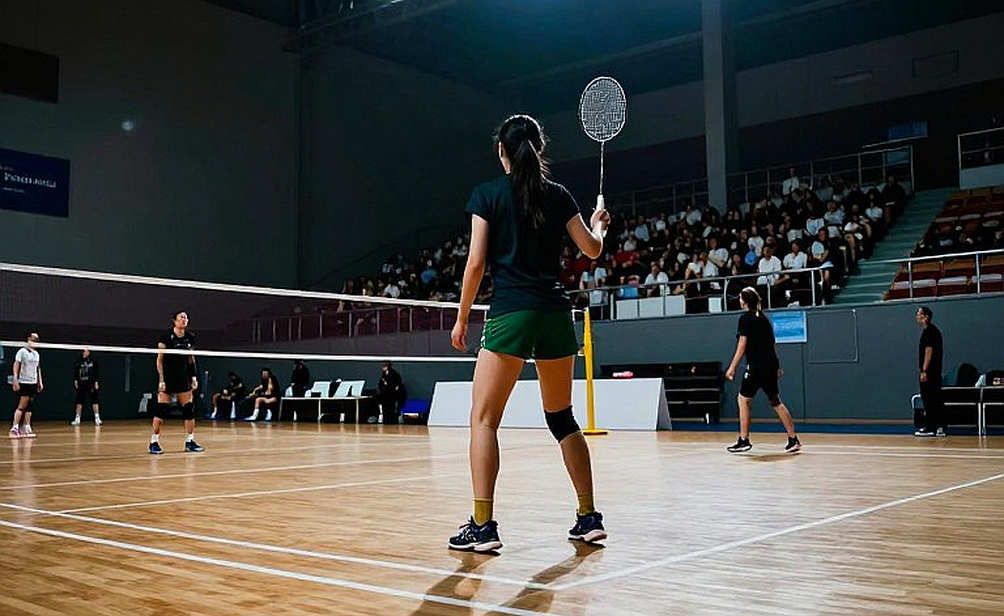
The pain of 2026 taught me to write with a bleeding heart rather than cold keys. It also taught me the reverse: emotion must not be used to fill gaps in the data. When a women's club dissolved and five players lost their jobs in one afternoon, I wrote about them with everything I had. Afterwards I still reopened the stats of the cancelled season and counted how that team had passed. Empathy does not replace counting.
Women's volleyball's transfer market is chasing brand before it has built a foundation. A club can buy three stars in a season. It cannot buy ten years of development.
The Other Side of the Banners
If you visit an arena hosting a women's tournament on a weekend, you see something vibrant: sponsor banners from banks, telecoms, fertiliser firms, insurers; organisers in uniform; a small stage for the awards ceremony; and a row of seats for provincial leaders.
If you return on a midweek day in the regular season, the attendance can be counted on two hands.
That contrast occupies my thinking more than anything else in the past two years. Vietnamese women's volleyball enjoys a better media position than before, thanks to regional Games and a few televised international events. But that position is cyclical. It spikes during the two months of a major tournament and falls close to zero for the rest of the year.
For sponsors this is a comfortable arrangement. They buy banner space exactly when audience interest peaks, they gain an image tied to women's sport, and they avoid funding a twelve-month season. In an annual report it is a line about social responsibility. In the arena it is an amount that cannot cover salaries for the medical staff.
I am not saying companies do anything wrong. They behave as companies behave. What I am saying is that a women's sport cannot grow on seasonal money. Until women's clubs secure steady revenue from broadcast rights, paying spectators and year-round shirt sales, every technical step forward still depends on the goodwill of someone with a communications budget.
There is one paradox worth recording. The highest-quality women's matches of a season are usually the ones never televised. Meanwhile the most televised matches are the weaker ones, selected on commercial criteria. General audiences therefore form their impression of women's volleyball from what they are shown, and what they are shown is not the best of it. That is a distribution problem, not a player problem.
The Transmission Chain: From Schoolyard to National Team
A volleyball ecosystem runs as a chain. At the front end are schools and provincial sports centres. In the middle are youth tournaments and the national championship. At the far end are the national team, television and the commercial market.
If you stand at the far end and see the national team short of setters, the cause almost always lies at the front. At school level, women's volleyball is taught as recreation. Girls practise spiking, serving and blocking, because those actions generate excitement. Very few places teach them to read a block, to time an approach so the middle arrives on rhythm, or to position themselves in the backcourt. Those skills produce no thrilling moment in training, but they produce professionals.
I once visited a provincial training centre on a Saturday morning. About forty girls aged twelve to fifteen. Three nets. The coach was a man close to fifty, and he was the only person there with real expertise. He told me something I wrote down immediately: here I teach them to spike first, because if I teach them to pass, parents will not see their daughters excelling.
The incentive structure of Vietnamese women's volleyball leans toward impressiveness. A fourteen-year-old who can hammer a ball gets noticed, gets picked for the provincial youth team, gets sent to camps. A fourteen-year-old with a very steady first pass gets nothing, because youth tournaments lack statisticians and lack spectators.
On height, this is where Vietnamese women's volleyball has clearly improved over a decade. The number of players above one metre eighty in youth squads is higher than before, a result of earlier scouting plus better nutrition in some localities. But height only opens a door. It does not replace backcourt skill. A tall team with a poor first pass still loses to a shorter team that controls the ball, and I have seen that happen many times in domestic competition.
At the other end of the chain, the women's national championship now has enough teams for a serious season, but far fewer with professional medical and physical standards. Most teams still rely on one or two part-time doctors, a small gym, and a nutrition plan arranged by the coach. At that level, a knee injury to a nineteen-year-old hitter is not merely an injury case. It is the end of an investment.
The volleyball court and the esports stage share one destiny: both are most beautiful when about to end. In both, attention arrives only at the final round, and those eliminated early are not remembered. Vietnamese volleyball has a transmission chain whose weakest link sits in the middle, where players aged seventeen to twenty need a genuinely professional environment but meet a league in which most clubs have just enough resources to survive.
What I No Longer Believe
For years I wrote from a beautiful belief: small club, small budget, big spirit, and one day they would make something happen. I still want to believe it. But I owe it to myself to reread my own data, and the data does not say that.
Across five consecutive seasons I compiled myself, the four women's semifinalists almost always fall within the same group of five clubs. A small club breaking through does happen, but it is the exception and mostly tied to two factors: a youth cohort maturing at the same time, or the right foreign signing at the right moment. When either factor disappears, the small club returns to its position. The circle I sang about in so many articles was really a straight line bent by two surges, and I was the one drawing extra circles to make it prettier.
One thing also needs saying about the star narrative. In volleyball, an outstanding hitter can lift an average team one level. She cannot carry that team through a semifinal if the backcourt cannot handle hard serves. Many domestic articles, including mine in the early years, implicitly assumed the star was the solution. In reality the star is a necessary condition, and the quality of the second ball is the sufficient one.
And the last thing I no longer believe: that time solves things by itself. I find no trend in my tracking data showing women's clubs increasing the number of properly developed young players each year. The number of youth teams in grassroots events is rising, but the number of players trained professionally with full nutrition, medical care and conditioning is roughly flat. A system that moves sideways while the rest of the region moves upward is called falling behind, even when the scoreboard does not yet show it.
I write this without denying what has been achieved. Vietnamese women's volleyball today is stronger than it was a decade ago, and that is the work of many people labouring quietly. But progress exempts no one from hard questions. And the hardest one, I think, is this: if we own the best generation of hitters in our history, why are the backcourt and the setter position still where we lose the most important matches?
What I Want to Know by Season's End
I will keep carrying two sheets to every match this season. One for the player who scores, one for the player who passes.
By season's end I want to know one thing: whether any club in the Vietnamese women's league spends more money and makes less noise building a stable backcourt and a mature setter, instead of signing a headline deal in June. If one does, I will write about them. And I will write for a long time.
I write because there are matches that must never be forgotten, if only for a ball that grazed the line and was called out.